

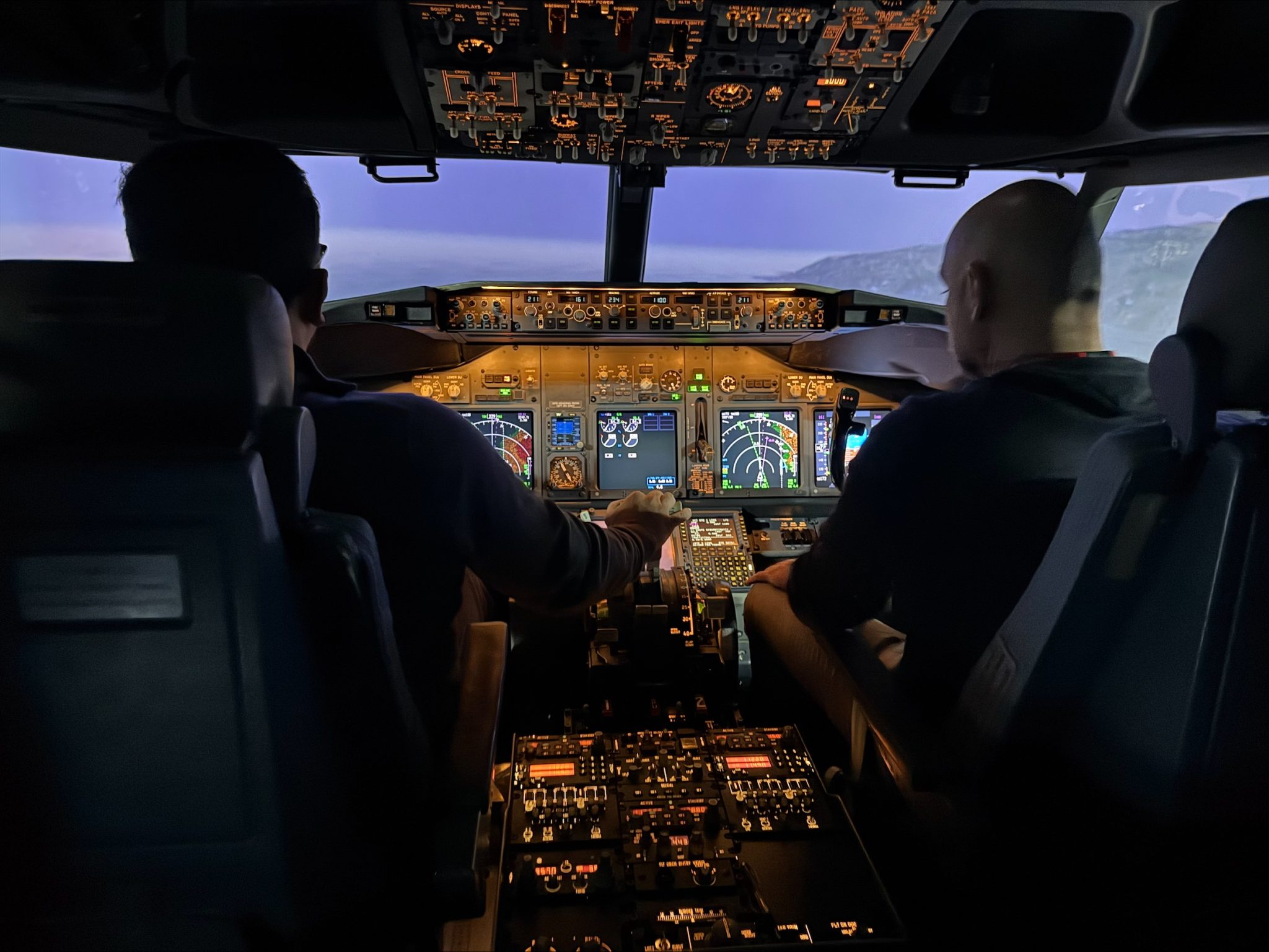
Every airline has its own approach to training but, at FLY4, that path is uniquely personal, rigorous and rewarding. Whether you’re still in ground school or counting down simulator sessions, it helps to see what lies ahead – from theory exams to type ratings, observation flights to line training.
For trainee pilots like Niall Fitzgerald, the road to a FLY4 cockpit is a thrilling blend of passion and perseverance. Niall first caught the flying bug in secondary school, and after saving up for his training in Cork, he powered through 13 demanding ATPL exams within six months.
“It was six months of hard study… quite a lot of content in a short period of time,” he recalls, highlighting both the challenge and the focus required to earn a licence that sets the foundation for every commercial pilot’s career.
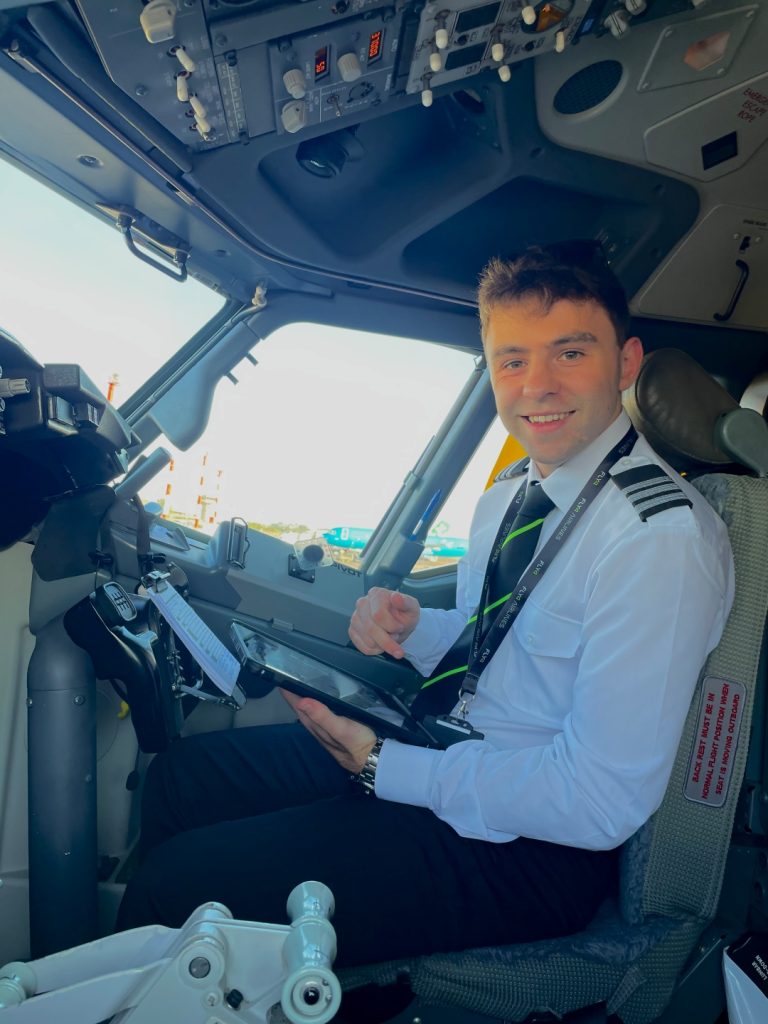
Joining FLY4: A culture of growth and safety
When Niall completed his ATPL and commercial training, he applied to FLY4. He had two big attractions: the chance to fly the Boeing 737, a type he’d admired since childhood flights, and the airline’s reputation for genuinely valuing its people.
“I wanted to be part of a growing airline,” says Niall. “Especially in such a volatile industry, it was important to feel like more than just a number. You get to know everyone here, and that makes a real difference in how you work together.”
For Niall, the aircraft type was part of the dream too. “Flying the 737 has been a goal of mine for years,” he adds. “There’s something about the hands-on feel of the aircraft, more tactile, that makes it really appealing.

Sam Derdeyn, one of FLY4’s newest Type Rating Instructors (TRI), agrees that the airline’s emphasis on people-first training sets it apart.
“They recruit people who fit the culture and want to grow,” says Sam. “From day one, I felt they wanted me to succeed—and not just for the role I had, but for where I could go. They foster development, they trust you, and that motivates you to give back.”
Unlike many airlines where instructors are segmented by function, FLY4’s TRIs handle everything—from classroom sessions to sim instruction to line training. “It gives us better continuity with the trainees,” says Sam. “And it builds a relationship that helps both sides.”
Real flights, real learning
After ground school and sim sessions on the Boeing 737 (about 15–20 simulator legs tailored to each trainee), cadets move to FLY4’s Operator Conversion Course. This isn’t just a checklist of procedures; it’s an immersive, day‑in‑the‑life rehearsal of a full flight – from briefings and call‑outs to cabin safety checks. Sam describes it as “mimicking a real flight from A to B,” teaching squad‑wide standards and shared crew expectations.
Next comes the truly eye‑opening chapter: observation flights. Instead of consoles and monitors, cadets sit in the jump seat behind an experienced Captain and First Officer on live passenger services. Niall remembers his first observer legs vividly: “Seeing ground handlers, ATC calls, weather diversions – everything clicked into real life,” he says. “That’s when you see how training plays out beyond the simulator.”
Taking the controls
Observation flights build confidence; line training cements it. Cadets then step into the First Officer seat under TRI supervision. Sam still recalls his first line‑training session: “Watching a pilot go from checklist anxiety to smooth, confident flying with paying passengers – that’s hugely rewarding.”
When asked what TRIs should remember when taking on cadets, Sam had some sage advice, “Never forget you were once a student. Show empathy, adjust to each trainee’s pace, and keep them curious – ask ‘why?’ beyond the manual.” This personal approach ensures pilots not only master procedures but also learn to think dynamically when the unexpected occurs.
Beyond First Officer: A lifelong journey
Earning the First Officer stripe is just the start at FLY4. In line with CAA/EASA regulations, pilots must log 1,500 hours (including multi‑crew operations) before upgrading to Captain.
At FLY4, opportunities for a command role come through demonstrated skill, safety mindset and leadership potential. Senior captains mentor junior officers and, as routes expand, deserving pilots find their way to the left seat.
For those drawn to instruction, FLY4 offers a clear path from Captain to TRI and on to Type Rating Examiner (TRE), the highest in‑house qualification. Sam’s own progression took him from Captain to FLY4 TRI in under a year – driven by a passion for people and training innovation.
The human element
What unites every stage of this journey is the people. And for both Niall and Sam, it’s the relationships – not just the routines – that make FLY4 stand out.
For Niall, the sense of community has been just as impactful as the training itself. “We’re a small family,” he says. “Everyone’s name is known, everyone helps. From the flight ops team to the instructors and fellow trainees, there’s a shared understanding that we’re all working toward the same goal. You’re never on your own.”
For Sam, the most rewarding part of his role as a TRI is the feedback. “When students tell you your training style worked, that they felt supported, and then their next instructor says, ‘They’re flying at a great level’ – you know you’ve had a positive impact,” he explains.
It’s not about perfection, Sam insists. “It’s about giving people confidence – the kind they carry into the next stage. That’s what makes you feel like the hours you’ve put into prep, planning and flying are really worth it.”
For low-hour pilots dreaming of those jump seat moments and future command upgrades, FLY4’s programme offers both rigour and heart. From acing ATPL exams to landing a Boeing 737 with passengers on board, every trainee’s story becomes part of FLY4’s shared success.
And with each new cohort, the airline reaffirms its commitment: to train exceptional pilots, one inspired flight at a time.